How to Build an Outfit (Without Buying Anything New)
How to Build an Outfit (Without Buying Anything New)
One of the biggest misconceptions women have about getting dressed is believing they simply don't know how to put outfits together.
After years of helping women build wardrobes, I don't think that's the problem.
Most women have never actually been taught how an outfit is built.
Instead, we've been taught to shop.
When an outfit doesn't feel right, we assume we need another top.
A different pair of jeans.
A new jacket.
Maybe another pair of shoes.
But buying another piece doesn't automatically create another outfit.
Building an outfit is a skill.
And like any skill, once you understand the process, it becomes much easier.
The good news?
You probably already own most of what you need.
You simply need a different way of putting it together.
Let's walk through the process.
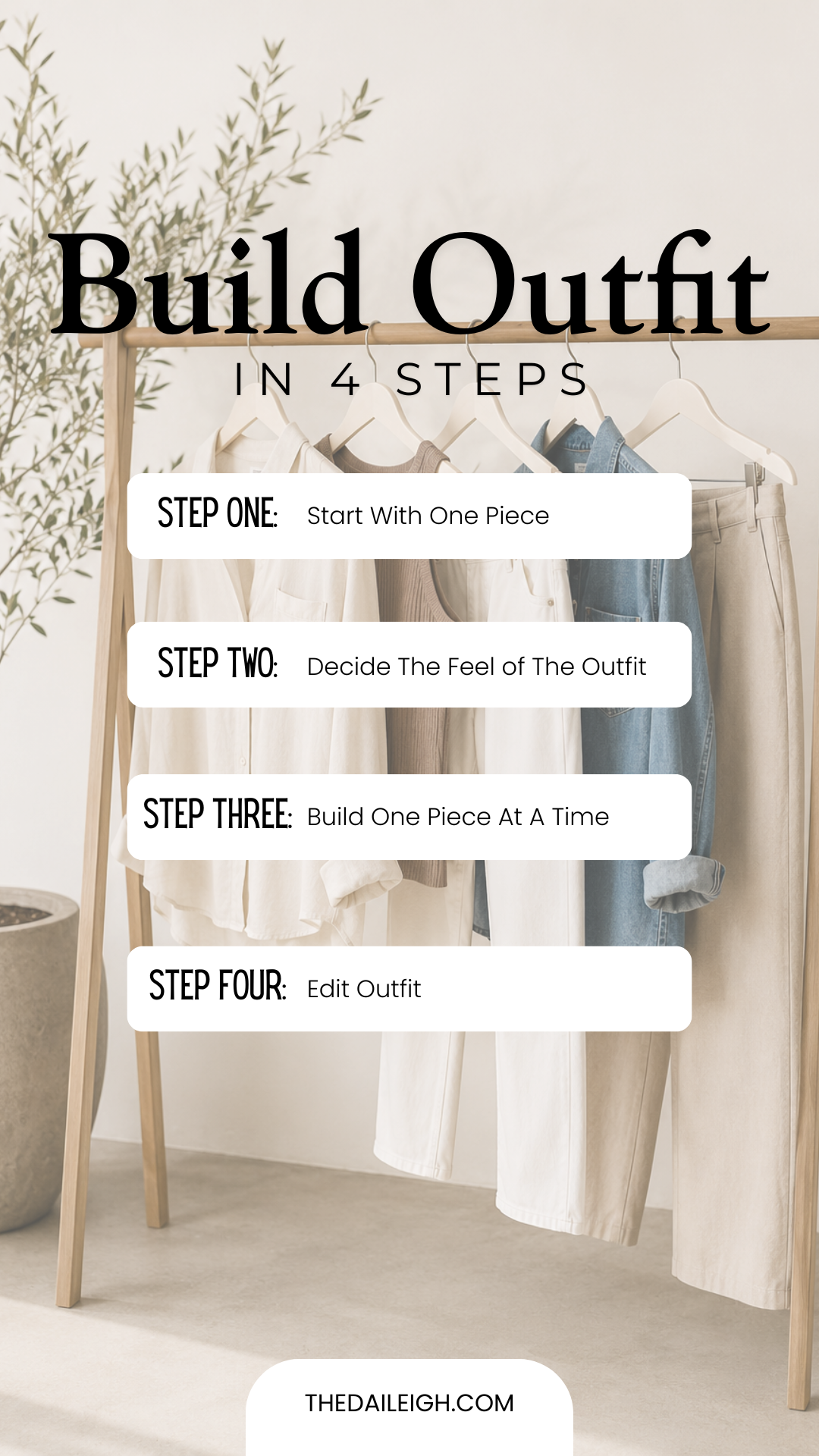
Step 1: Start With One Piece
One of the biggest mistakes women make is trying to build an entire outfit all at once.
Don't.
Instead...
Start with one piece.
It could be:
your favorite pair of blue jeans
white jeans
a casual dress
linen pants
a white tee
a button-up shirt
That piece becomes the foundation for every decision that follows.
Think of it as your starting point.
Once you've chosen that first piece, the rest of the outfit becomes much easier because you're no longer asking,
"What should I wear?"
You're asking,
"What works with this?"
Those are two completely different questions.
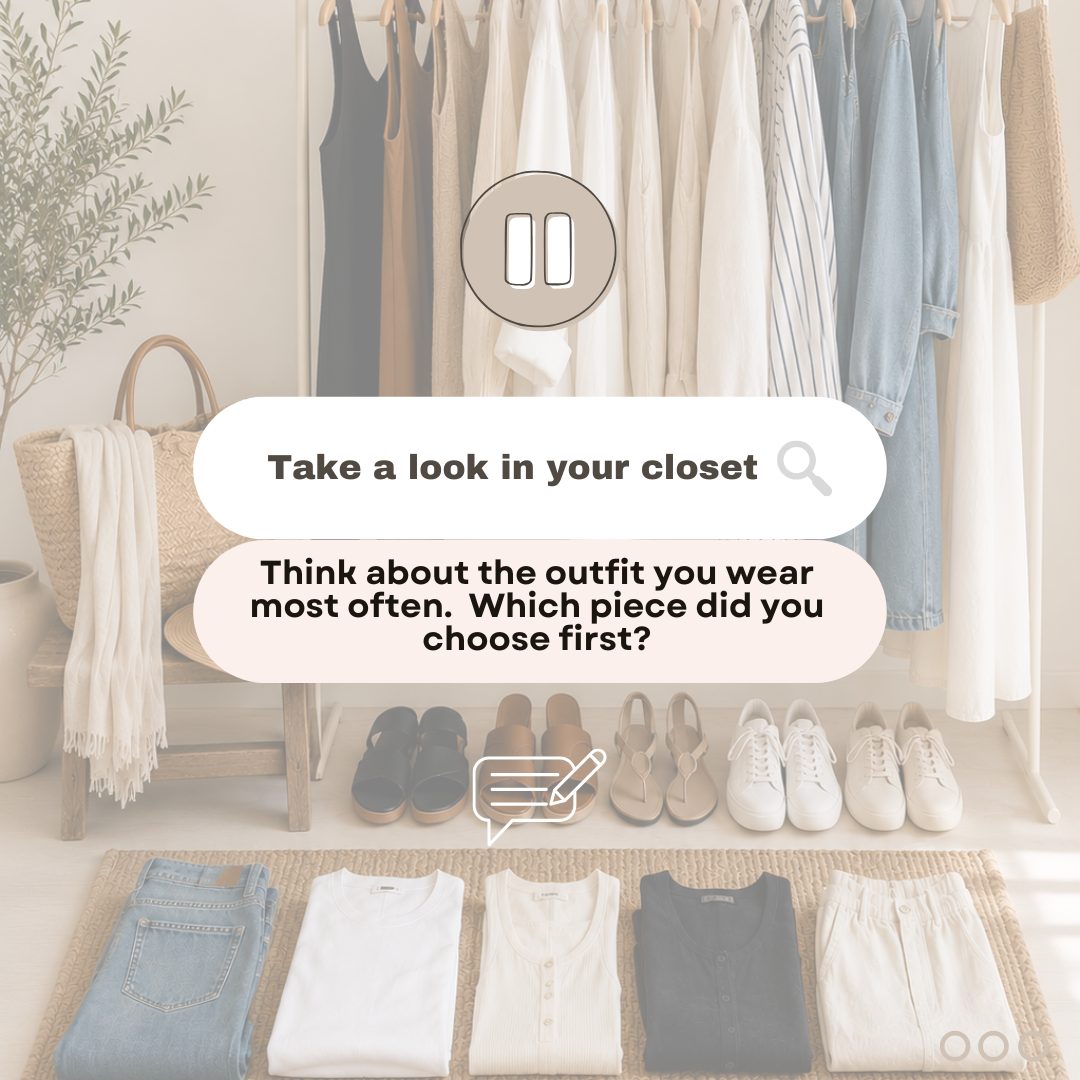
There's a good chance that piece naturally becomes the starting point for many of your outfits.
Once you recognize your own starting pieces, getting dressed becomes much less overwhelming.
Step 2: Decide How You Want the Outfit to Feel
Now that you've chosen your starting piece, decide how you want the finished outfit to feel.
This is one of the most important decisions you'll make because it gives every piece you choose next a purpose.
Without a direction, it's easy to start pulling random pieces from your closet that look good individually but don't create the outfit you're trying to achieve.
Instead, decide the overall feel first.
Do you want it to feel:
casual?
relaxed?
polished?
elevated?
comfortable?
Once you've answered that question, you're ready to start building the outfit.
Step 3: Build the Outfit One Piece at a Time
Now that you've decided the direction, it's time to start building.
Let's use a white tee as the starting piece.
Want it to feel more casual?
Add:
straight-leg jeans
white sneakers
utility jacket

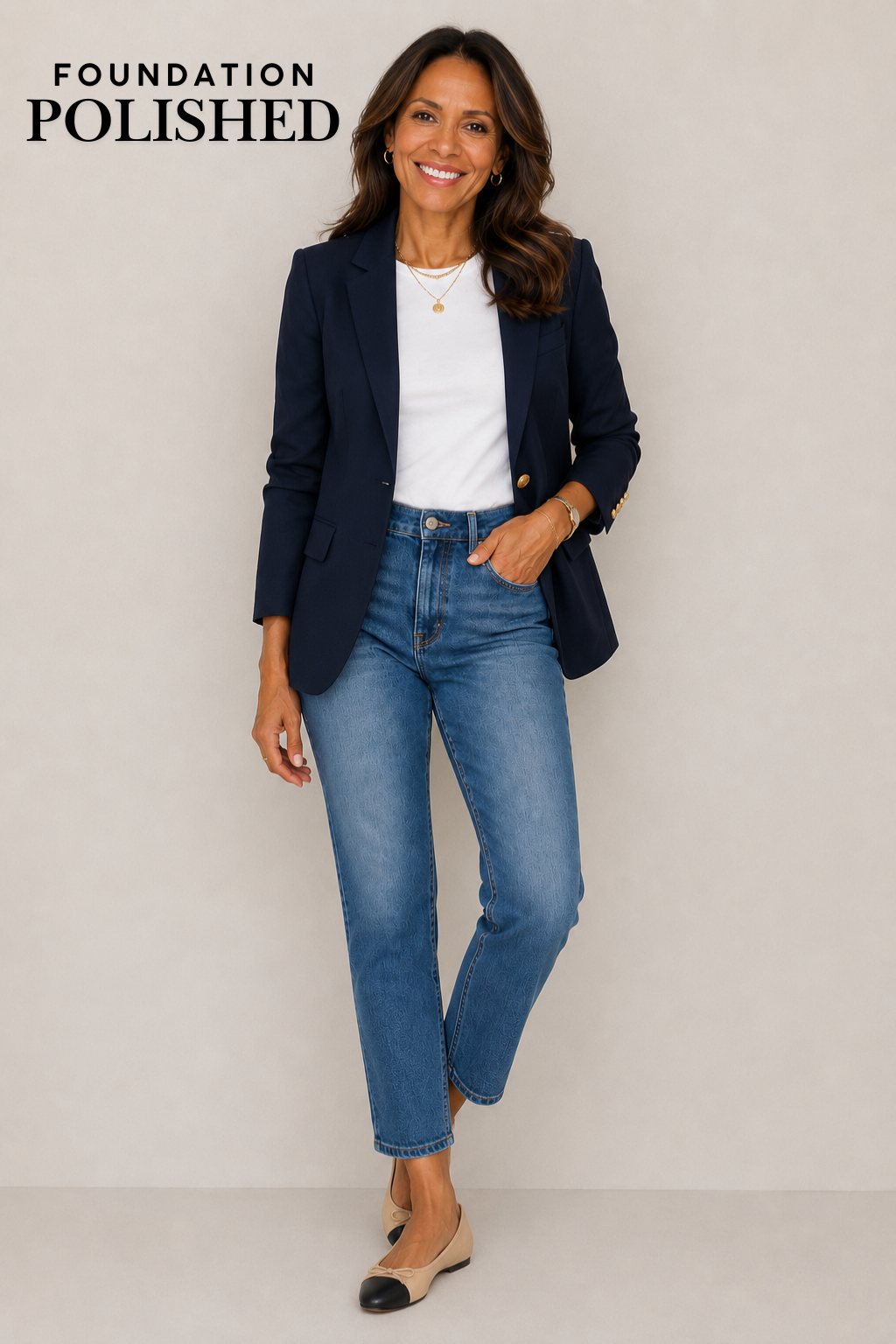
Want it to feel more polished?
Swap to:
white jeans
loafers or ballet flats
lightweight blazer
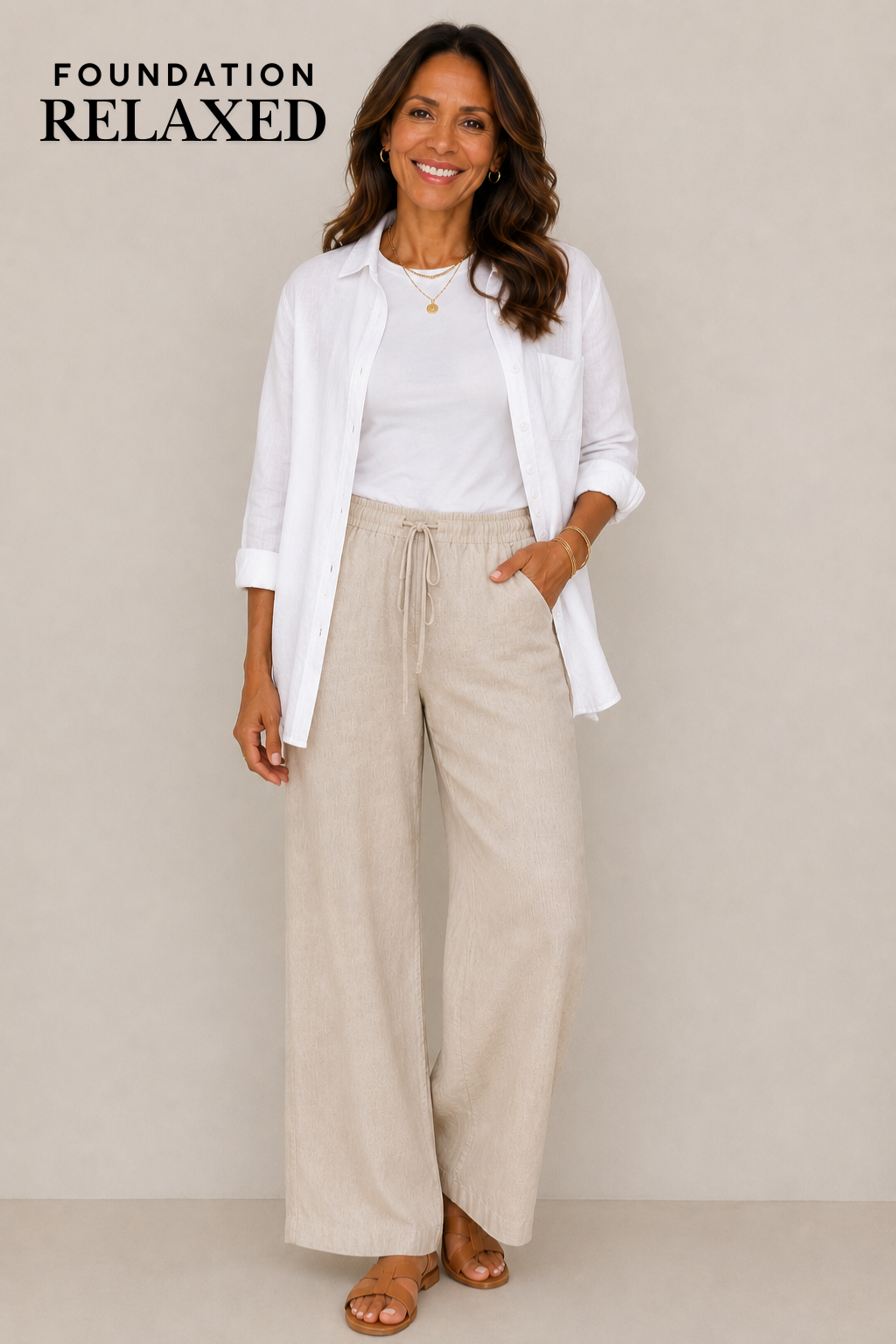
Want it to feel more relaxed?
Try:
linen pants
slide sandals
lightweight button-up shirt worn open
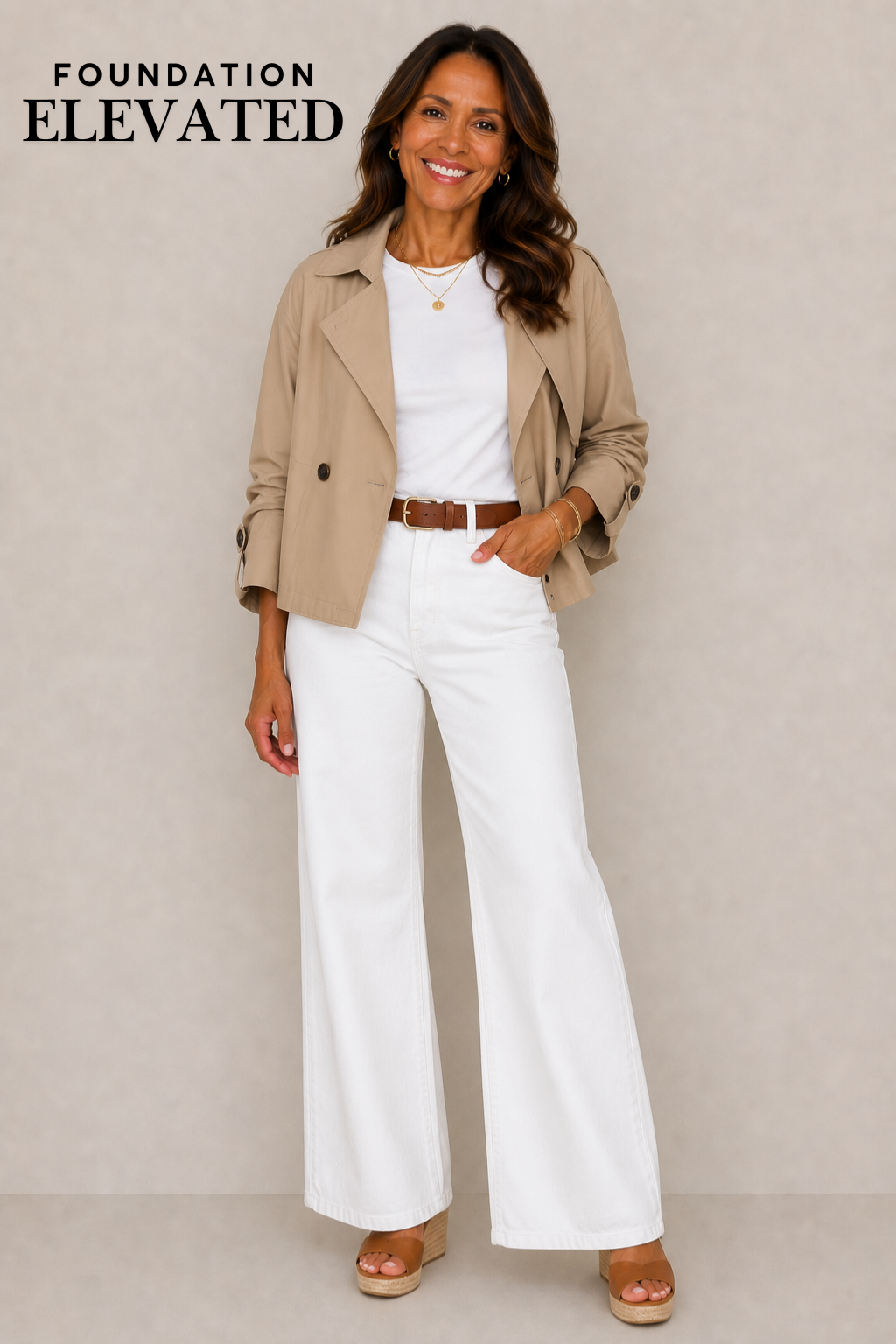
Want it to feel a little more elevated?
Try:
wide leg denim
wedge heels
structured blazer
simple jewelry
Want to be more comfortable?
Try:
layer tee under sleeveless dress
sandals or flats

Notice what stayed the same throughout every example.
The starting piece.
Only the supporting pieces changed.
That's how one foundation piece can become several completely different outfits.
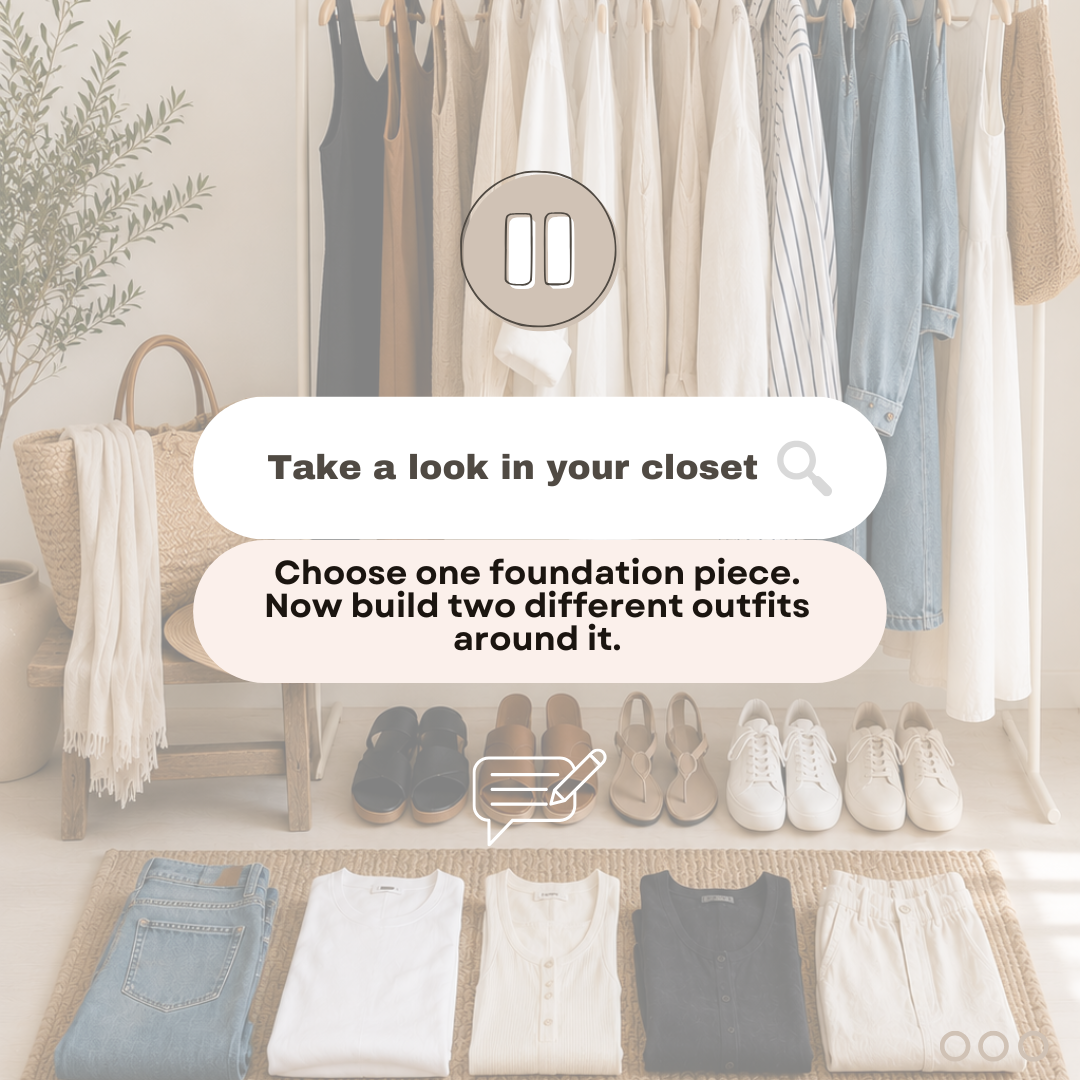
The goal isn't to change the starting piece.
It's to see how much you can change the outfit simply by changing the pieces that support it.
Step 4: Edit the Outfit
You've chosen your starting piece.
You've decided how you want the outfit to feel.
You've built the outfit.
Now it's time for one final step.
Edit it.
Sometimes an outfit doesn't need more.
It simply needs a small adjustment.
If something feels off, don't start over.
Figure out why.
If the outfit feels too casual...
Add one structured piece.
That might be:
a blazer
loafers
a structured handbag
a button-up shirt
One polished piece is often enough to elevate the entire outfit.

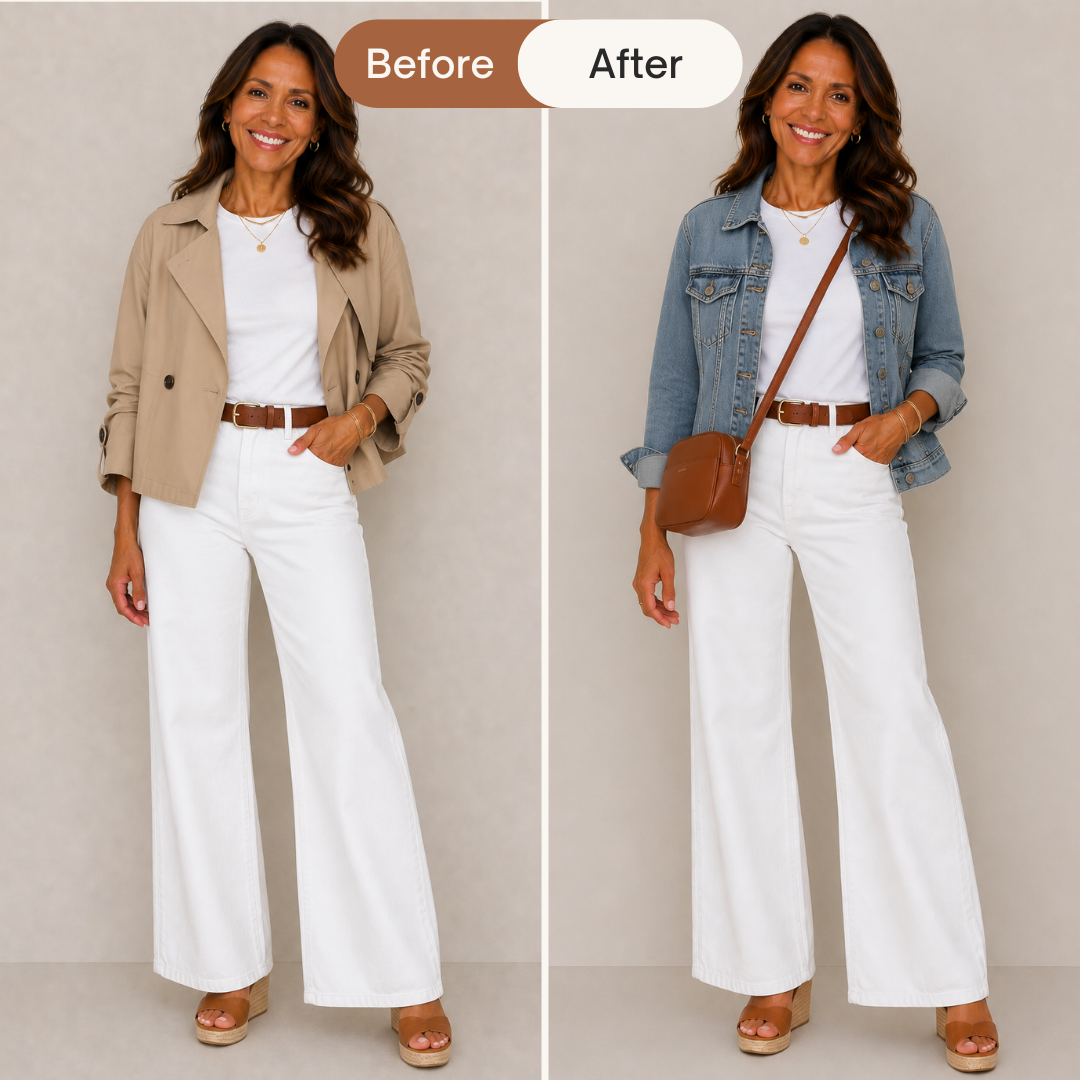
If the outfit feels too dressy...
Relax it.
Try:
white sneakers
a denim jacket
a utility jacket
a crossbody bag
The outfit instantly becomes more wearable for everyday life.
If the outfit feels too plain...
Sometimes an outfit doesn't need to be completely changed.
It simply needs one piece that adds a little more interest.
That could be:
a layer
jewelry
a different handbag
a different shoe
One thoughtful change is often all it takes to make the outfit feel complete.

If the outfit feels too busy...
Remove one statement piece.
When too many pieces compete for attention, the outfit starts feeling overwhelming.
Let one piece become the focus.
Everything else should support it.
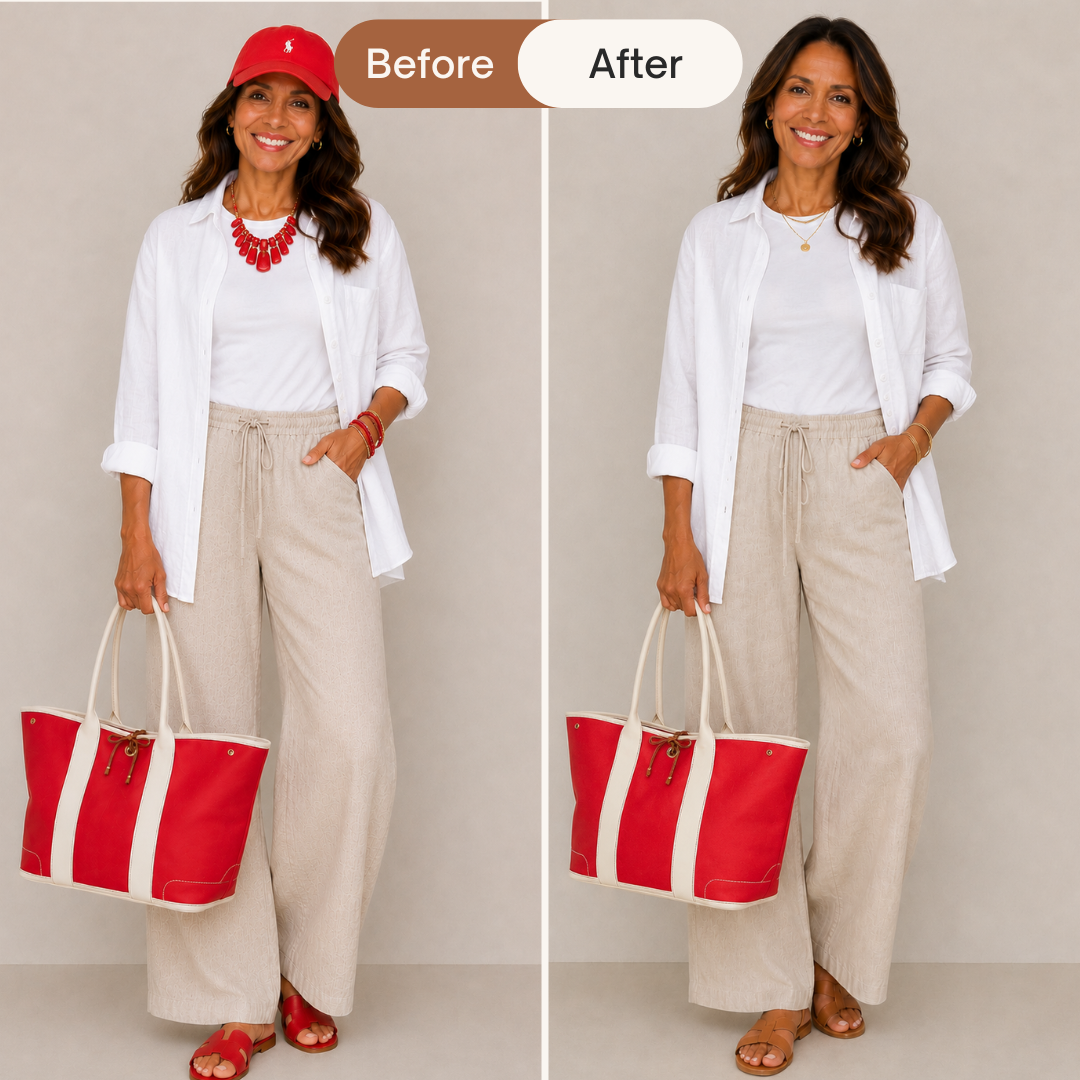
If the outfit feels unfinished...
It's often missing one final detail.
Maybe that's:
a layer
jewelry
a different shoe
a handbag

Small finishing touches often make the biggest difference.
The goal isn't to keep adding more.
It's to add the right piece.
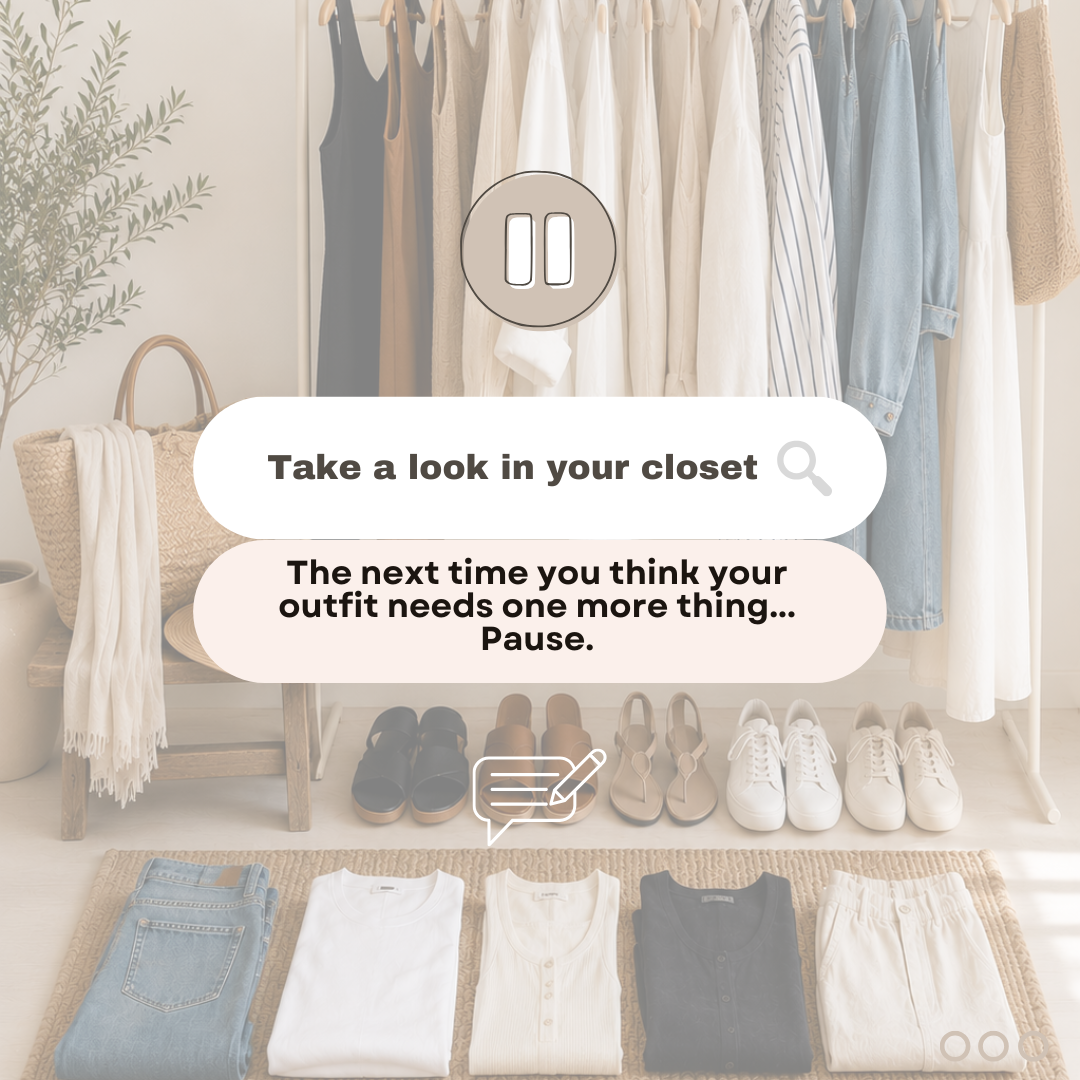
Before adding another necklace, another layer, or changing your shoes one more time...
Ask yourself:
Does this outfit actually need something else...or am I simply second-guessing it?
More often than not, you'll realize the outfit was finished long before you thought it was.
Outfit Building Gets Easier With Practice
The first few times you intentionally build an outfit, it may feel slow.
That's completely normal.
You're learning a new skill.
But something interesting happens over time.
You stop looking at individual pieces.
You start seeing possibilities.
A white tee no longer feels like just a white tee.
It's the beginning of half a dozen different outfits.
A denim jacket isn't just another layer.
It's a way to completely change how an outfit feels.
Your favorite jeans become more than a pair of jeans.
They become the foundation for countless outfit combinations.
The more you practice, the less time you'll spend wondering what to wear.
And the more confidence you'll have getting dressed each morning.
Because you'll no longer be relying on inspiration.
You'll understand the process.
You Don't Need More Outfits—You Need More Starting Points
One of the reasons getting dressed feels easier for some women is because they aren't creating a brand-new outfit every morning.
They're simply starting from a different place.
Yesterday, your starting piece might have been a white tee.
Today, it might be white jeans.
Tomorrow, it could be a casual black dress.
The process stays exactly the same.
Only the starting piece changes.
Once you understand how to build an outfit, you don't need dozens of completely different outfit ideas.
Every time you get dressed, you're simply repeating the same four steps but with different foundation pieces.
That's how you begin creating more outfits from the clothes you already own.

For example:
your favorite pair of jeans
a white tee
a denim button-up shirt
Now imagine each one as the starting point instead of trying to build a completely different outfit every day.
You'll probably discover you already have far more outfit possibilities than you realized.
Every great outfit starts the same way.
One piece.
One decision.
Everything else simply builds from there.
Maybe getting dressed was never the problem.
Maybe no one ever taught you how to begin.
Ready To Take This A Step Further?
You shouldn’t be stuck wearing the same outfits when you have a closet full of clothes — learn how to identify the roles of the pieces in your wardrobe so you can start putting together outfits around the clothes you’ve been struggling to wear.
I’ve created a guided framework that will show you how to build outfits around the clothes you have. Sign up below to be notified when this product is available:
💛 I'd Love to Help
Every wardrobe is different, and sometimes the biggest challenge isn't covered in one blog post.
You don't need another shopping recommendation—you need someone to help you make sense of what you already own.
What's one piece—or even one outfit—that just doesn't seem to work no matter what you try?
Fill out the form below, and I'll share my suggestions for making that piece work with the rest of your wardrobe.